Multi-Family and HOA EV Charging in The Woodlands
Condo garages, apartment lots, and HOA communities across The Woodlands and Montgomery County, built so one resident's charger is not everyone's problem.
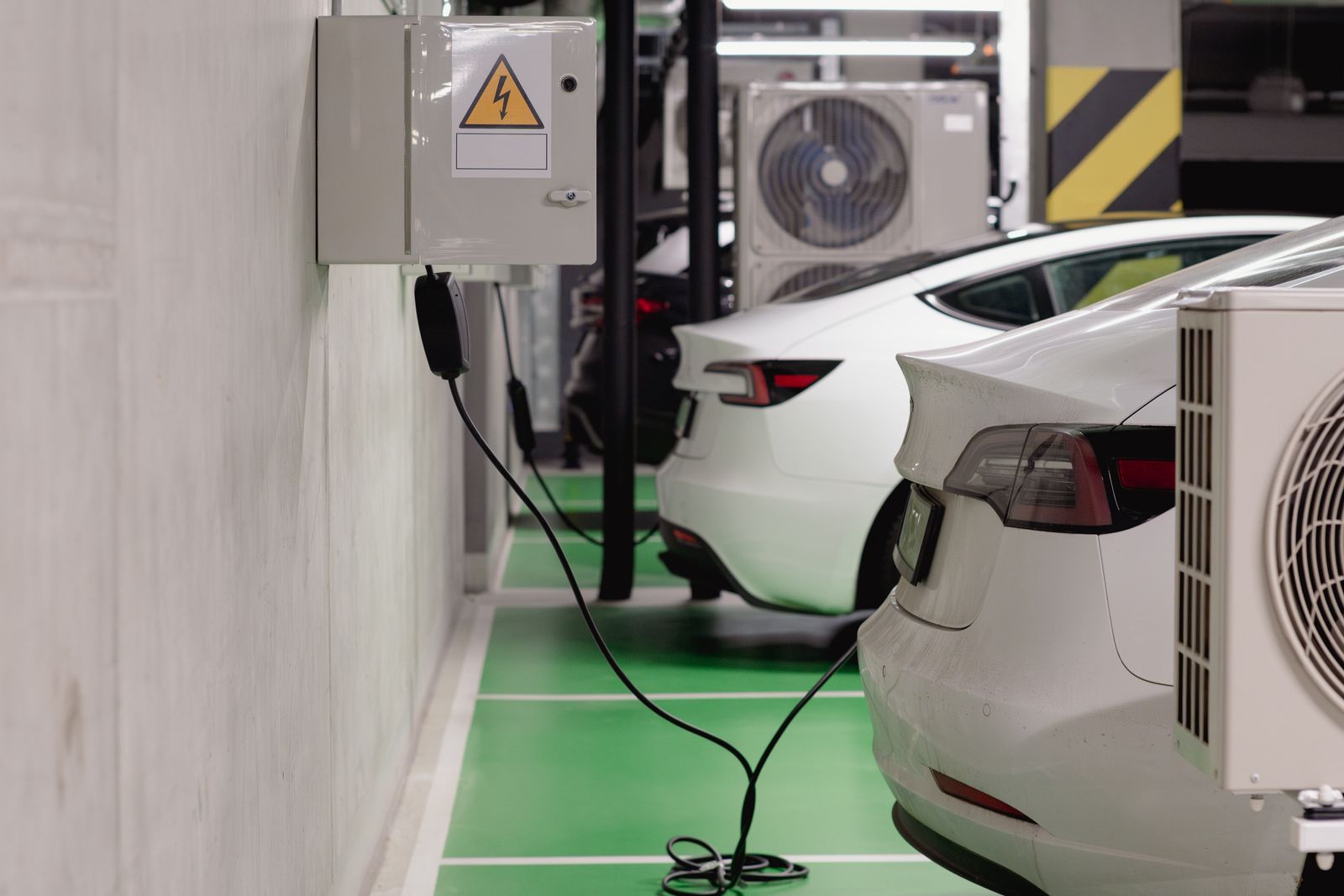
Shared Parking Needs Shared Infrastructure
Charging in a community with shared parking raises two questions a single-family garage never does: where the power comes from, and who pays for it. The Woodlands EV Charger Installation designs and installs multi-family and HOA EV charging across The Woodlands, Spring, and the surrounding communities, using load sharing so multiple stations can coexist on an available feed and sub-metering so each resident's consumption lands on their own bill. These projects move at the speed of a board, which is slower than a homeowner, and we plan for that. The usual sequence is an assessment, a written proposal the board can circulate, a meeting where we answer questions, and then a build phased to match whatever the community has budgeted.
What a Multi-Family Project Covers
A community install is a design problem as much as an electrical one. Here is what the work includes.
Capacity assessment of house and resident meters
We establish what the common-area service can supply and whether individual unit panels are a realistic source, because that single question changes the entire design and the entire cost structure.
Load-shared station design
Power sharing allows a group of stations to draw from one feed and allocate current dynamically, which routinely turns an impossible project into a buildable one without a service upgrade.
Sub-metering so costs land on the right resident
Each station is metered and reported so the association is not absorbing fuel costs, which is usually the board's first and most persistent concern.
Access control and authentication
Stations are configured so only authorized residents can start a session, with reporting the association can audit.
A scalable backbone for future stations
Conduit, feeders, and panel capacity are sized for more stations than phase one, so adding spaces later is an equipment install rather than another construction project.
Reserved-space and accessibility considerations
Siting accounts for deeded or assigned spaces, accessibility requirements, and drive-aisle clearances before anything is committed to a plan.
Protection and durability in shared garages
Bollards, wall-mount positioning, and cable management are specified for a parking environment used by people who did not install the equipment and will not be careful with it.
Board-ready written proposal
Scope, phasing, cost, and timeline in a document that can be circulated, questioned at a meeting, and voted on without translation.
Coordination with property management and the utility
We work with your management company on access and notice, and we manage any utility conversation that capacity requires.
Permits, inspection, commissioning, and handover
Full permitted work, tested under load, enrolled on the network, with documentation handed to the association and the management company.
Three Steps Through a Community Project
- 01
Assessment and the honest number
We walk the garage or lot, review the house meter and common-area service, and establish how many stations are feasible now and what the ceiling is. That answer comes with the reasoning attached, so a board member who is skeptical can follow it. Nothing is proposed before this is settled.
- 02
Proposal, meeting, and vote
You get a written proposal covering design, station count, load sharing, metering, phasing, and cost. We will attend a board meeting to walk through it and answer questions directly, because these decisions stall most often on a technical question nobody in the room can answer. Phasing options are included so the association can start smaller.
- 03
Phased build and handover
Work is scheduled around resident parking with notice given through management. Stations are installed, load sharing is configured, metering is verified against real sessions, and access is set up for the residents who are participating. Management receives the documentation and the contact path for support.
Why Associations Get Further With Us
We design for the fifth charger, not the first
Approving one station and then discovering that the second requires tearing up the garage is how these projects lose board support. Sizing the backbone for growth during phase one is inexpensive and it keeps the next vote easy.
Metering settles the argument before it starts
Most HOA charging disagreements are about cost allocation, not about charging. Putting per-resident metering in the design from the beginning removes the objection that otherwise reappears at every meeting for a year.
We speak board, not just electrician
Load sharing, demand charges, and sub-metering are genuinely confusing to people who have never had to think about them. Explaining them clearly, in a meeting, without condescension, is a meaningful part of what we do on these projects.
- TECL-Licensed & Insured
- Load-Shared Designs
- Per-Resident Metering
- Board-Ready Proposals
Get Your Community a Real Proposal
If charging has been on the agenda for a few meetings without moving, a written plan with real numbers is usually what breaks the stall. The assessment conversation costs nothing.
(281) 789-1750Request an HOA assessment: (281) 789-1750